Positive distraction resources
FAQs about entertainment & positive distraction in healthcare settings
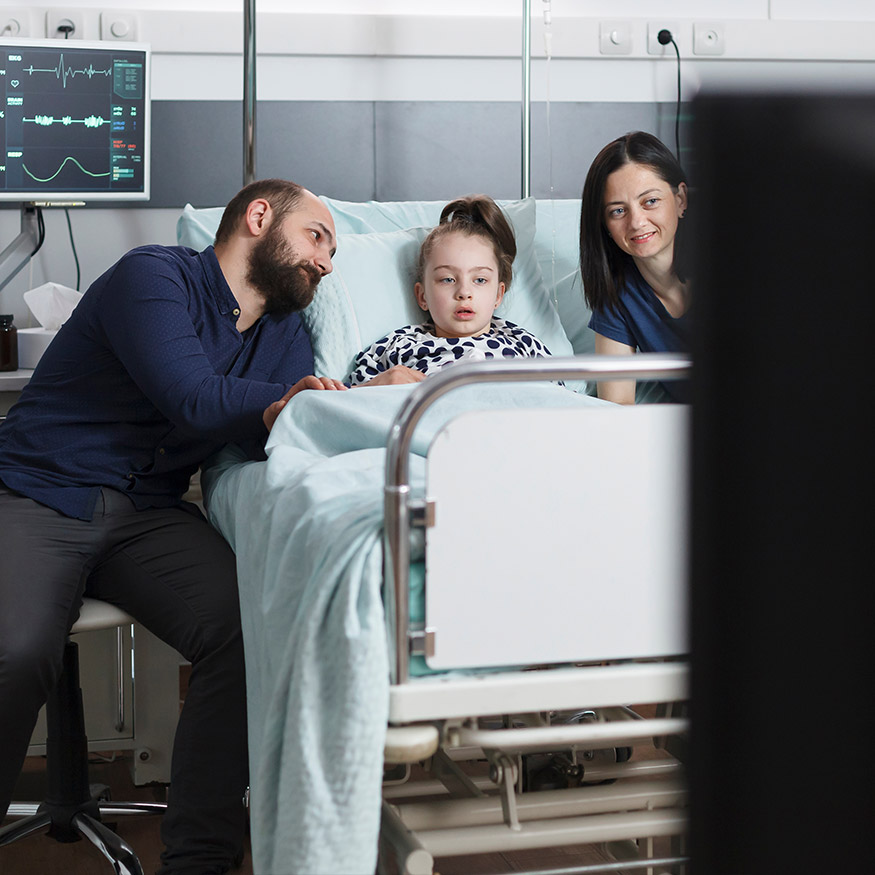
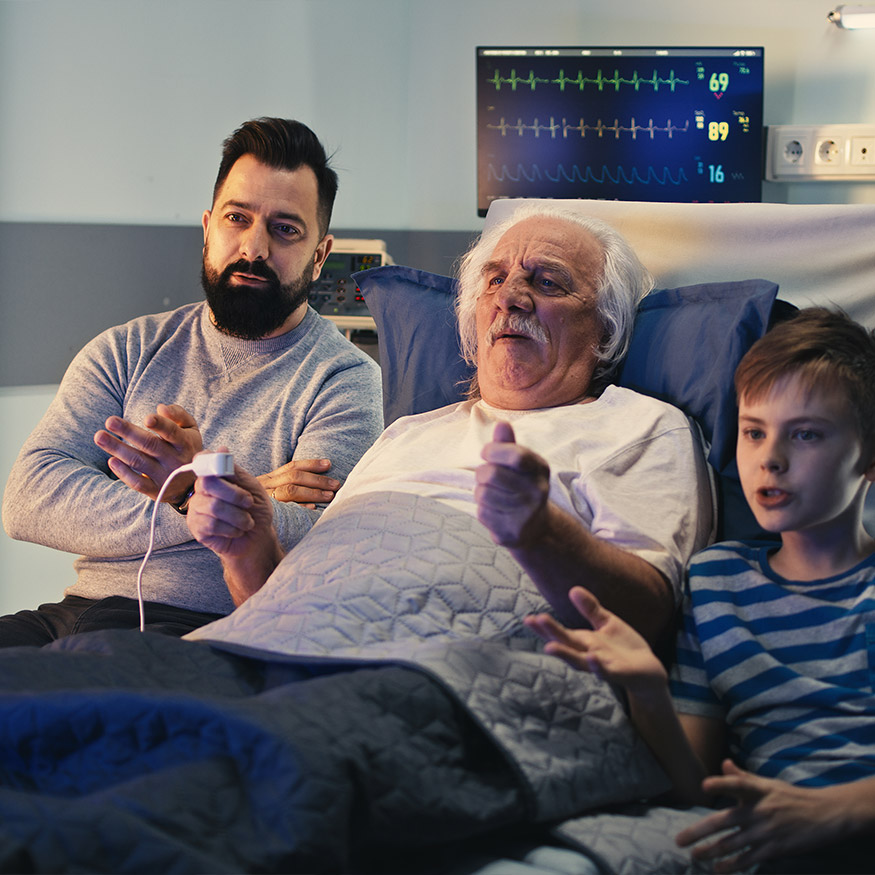
When you offer comforts of home like TV programming, movies, and streaming in patient rooms, it can actually help reduce stress, anxiety, and pain perception.
Having a variety of quality entertainment and relaxation options available can also help give patients a sense of control and autonomy to choose how they want to spend downtime during their hospital stay, and alleviate feelings of boredom and isolation.
This can reduce calls for staff intervention and behavioral or pain management.
There’s also evidence that offering entertainment can increase patient activation, better preparing patients for positive post-discharge outcomes.
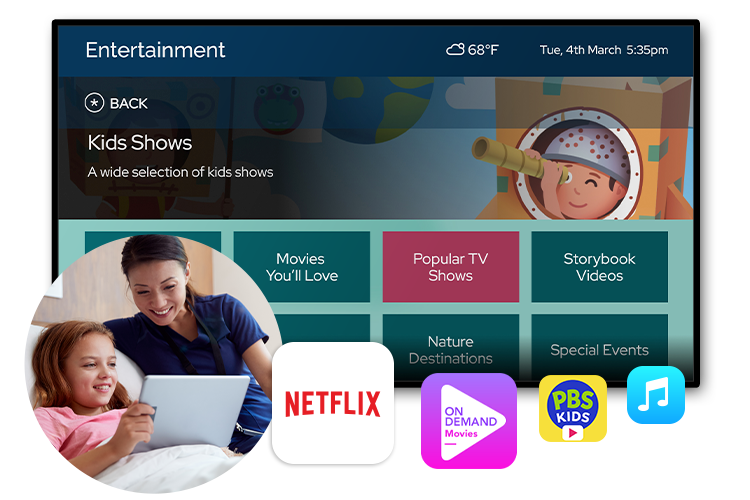
Hospitals can provide much-needed comforts to patients by offering a mix of entertainment and positive distraction including live TV, movies, streaming, on-demand movies, relaxation options, and curated content tailored to age, culture, and clinical needs.
When entertainment and positive distraction is easy to access, it helps patients pass the time, reducing their anxiety and making the stay feel less isolating.
Yes, offering quality entertainment options can affect a patient’s perception of care quality, influencing their hospital choice, brand perception, and HCAHPS responses.
When patients have entertainment that feel like the comforts of home, it can help alleviate stress, anxiety, boredom, and even pain perception.
Having the choice of a variety of options—such as movies, streaming, live TV, and relaxation content—gives patients control and autonomy in their stay, which they may not feel they have much of otherwise while in the hospital.
These positive distraction options contribute to your organization’s commitment to caring for all aspects of a patient’s well-being, reinforcing the human side of healthcare alongside the clinical care you provide.
Entertainment and positive distraction are part of the idea of hospitality-centered healthcare, which can lead to better patient outcomes.
Yes, offering positive distraction options to patients and their families can reduce nurse workload by decreasing call lights for non-clinical requests, especially when the options are available on an intuitive, user-friendly platform.
Entertainment options can help reduce patient boredom, stress, anxiety, pain perception, and feelings of isolation and confusion.
This control empowers patients with self-soothing tools; without them, patients often turn to nurses with repetitive questions or requests for conversation or other non-clinical tasks.
When patients engage with entertainment, they’re also more likely to comply with education assignments and other care plan-related tasks without needing nurses to remind or encourage them.
When upgrading the in-room entertainment for hospital patient rooms, evaluate your patient expectations for streaming, TV, movies, gaming, and relaxation content, as well as the security, bandwidth, and smart room integrations needed to create a seamless experience.
Ideally, you would offer all the entertainment options on one platform from one provider, making everything simple and streamlined for both patients and your staff.
STAYCAST is SONIFI’s patented casting solution developed in partnership with Google.
STAYCAST lets patients use their own phone to securely stream content from thousands of apps to the TV in their room, without entering passwords or credentials on the TV.
It gives patients familiar, personalized entertainment options that feel like home while maintaining network security and privacy with an enterprise-grade design.
Read more about the value of entertainment & positive distraction in a healthcare setting
Tailoring positive distraction & entertainment for specific patient demographics